About Unlock PDF
Unlock PDF removes supported protection from a document you are authorized to access and modify. Select the PDF, provide the required password through the offered controls, process and test the saved copy.
iLikePDF's Unlock PDF tool lets you re-save a PDF without a password, when you are entitled to open it – free and without any software. It is a good fit for re-save your own document without an open password, remove restrictions from a file you created, using a proper PDF application. You may also know it as unlock pdf online, free unlock pdf.
Everything happens in your browser: your files are not uploaded to our servers. It is private by design, quick to use and mobile-friendly. This version is limited, so read the notice above the tool.
Full walkthrough: How to Unlock a PDF You Are Allowed to Open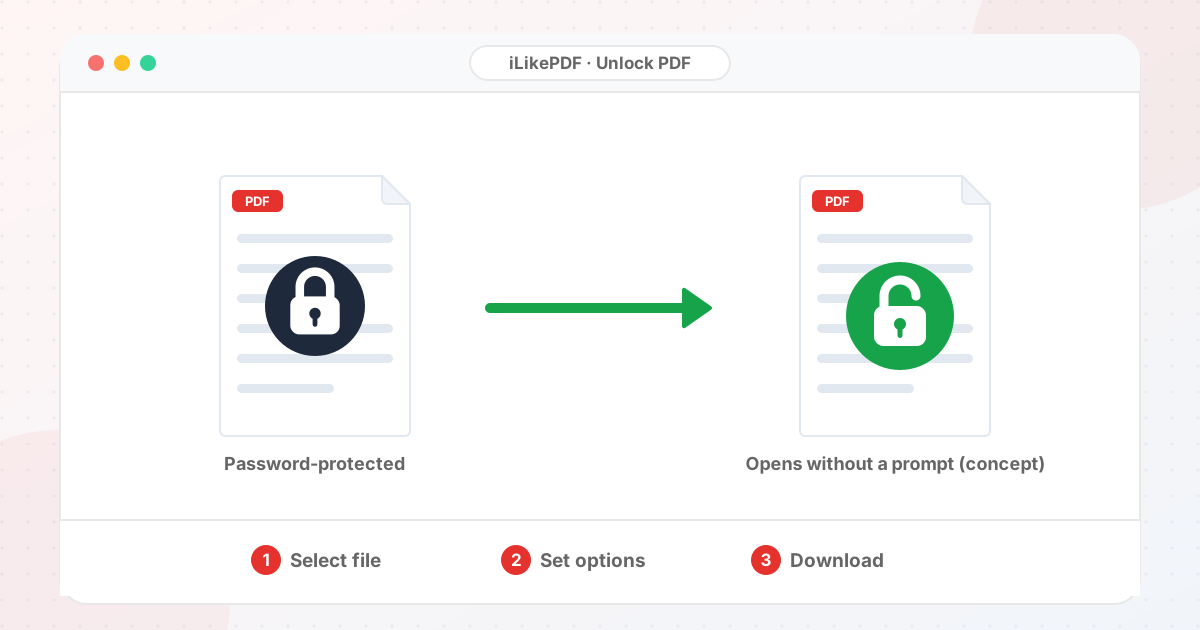
How to Use Unlock PDF
- Only use this on files you own or have permission to open.
- Choose the PDF; enter the password if you have one.
- Select Unlock PDF Document.
- If an error appears, remove the password in the application that created the file, then re-save.
Before & After
Before (Your original file(s))
- Files as you have them
- Nothing has been changed yet
After (New result file)
- A new file downloads to your device
- Your original stays untouched
Conceptual illustration, not a screenshot.
Supported Input and Output
| Accepted input | One PDF (.pdf) and, optionally, its password. | ||||||||||||||||||||||||
| Output | A PDF named unlocked-| Decryption | This version cannot decrypt password-protected files. It re-saves PDFs that the underlying library can open. | File handling | The processing code runs in your browser. The page loads the pdf-lib library from the unpkg CDN when it opens; the tool code does not send your PDF to a server. | Unlock PDF Features
Who Should Use Unlock PDF?
Use Cases and Output ChecksCommon uses
Check the output
Limitations and Troubleshooting
Common problems
Related Tools and GuidesQuick Summary
Share This ToolIf you found this tool useful, share it with friends and classmates: DisclaimerUnlock PDF is for personal and educational use. Check your local laws and your organisation's rules before you process copyrighted or sensitive documents. Results depend on your file and browser, so always check the output before you use it. This version of the tool is limited; see the notice above the tool. FAQs – Unlock PDF1. Unlock PDF kaise use karein?Apni file select karein, settings check karein aur “Unlock PDF Document” button dabayein. Result neeche dikhega; phir Download par tap karein. 2. Kya Unlock PDF free hai?Haan, iLikePDF ka Unlock PDF tool bilkul free hai. Koi payment ya signup nahi chahiye. 3. Kya main mobile se Unlock PDF use kar sakta hoon?Haan, yeh tool mobile-friendly hai. Aap Android ya iPhone ke browser se bhi Unlock PDF use kar sakte hain. 4. Kya meri file upload hoti hai?Nahi. Yeh tool aapke browser me chalta hai; aapki file iLikePDF ke server par upload nahi hoti. (Kuch features ek helper library CDN se load karte hain, lekin aapki file unme nahi jaati.) 5. What does Unlock PDF do?Unlock PDF removes supported protection from a document you are authorized to access and modify. Use it when the required result matches this operation; keep a separate copy of the source. 6. How do I use Unlock PDF online?Select the PDF, provide the required password through the offered controls, process and test the saved copy. Open the downloaded result before sending it to someone else. 7. Which source should I prepare for Unlock PDF?Prepare an authorized PDF and its opening password when needed. Start with a file that opens correctly in its usual viewer. A renamed extension does not convert the underlying format. 8. What should I check in the Unlock PDF output?Check that the copy opens as intended and that required pages and form content remain intact. Keep the original until the result has passed these checks. 9. Can Unlock PDF recover an unknown password?Do not assume that it can. A properly encrypted document generally needs valid access credentials; ask the owner for an authorized copy. 10. What is the difference between removing restrictions and decrypting a PDF?Permission restrictions and encryption-based opening protection serve different purposes. The required workflow depends on which protection the document uses. 11. Why does a PDF still ask for a password after download?The operation may not have succeeded or the wrong file may have been opened. Check the downloaded filename and test it in a fresh viewer session. 12. Can I unlock a file sent by someone else?Only when you have the owner’s permission to remove its protection. Request the password or a suitable unprotected copy through the normal sharing process. 13. Does unlocking make the document publicly available?It creates a less restricted file; sharing still depends on where you save or send it. Store the unprotected copy appropriately. 14. Can I merge a PDF after unlocking it?Yes, if the resulting PDF is compatible with the merge tool. Review its pages before combining it with other documents. 15. Does unlocking remove a digital signature?The effect depends on the file and processing method. Do not assume a modified copy retains the original signature’s validation status. 16. Should I delete the unprotected copy afterward?Keep only the versions needed for your workflow and follow your own retention requirements. Removing protection may increase exposure if the copy is shared accidentally. 17. Why might Unlock PDF fail on a large file?Unsupported encryption or a missing valid password can prevent processing. Close unnecessary tabs and test a smaller non-confidential sample to separate a file-specific problem from a browser problem. 18. When is Unlock PDF useful?Create an accessible working copy of your own previously protected document. Confirm the recipient’s requirements before preparing the final version. 19. What can I do after using Unlock PDF?Related next steps include Protect PDF, Edit PDF, Merge PDF. Choose one only when you need that additional operation. Review the an unprotected copy when supported before applying another change, and retain your source copy. |